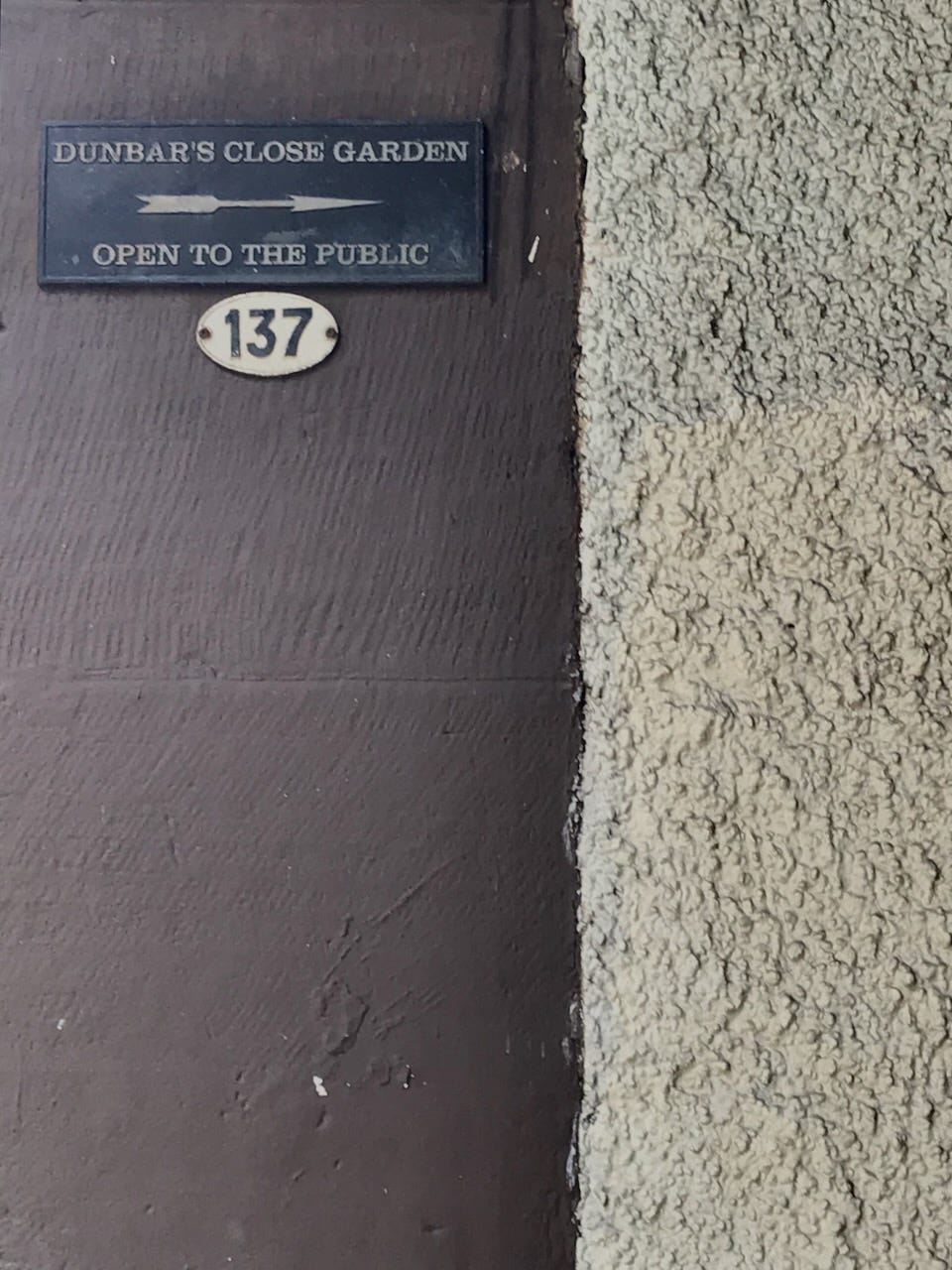

Dunbar’s Close Garden, a walk through time and space in Edinburgh’s historic Old Town.
Some alleys on the Royal Mile have been altered beyond history’s recognition. Some look the same no matter which random moment you stepped out of your time machine. Then, there are some that have a foot in both, unrecognisable as they were, but later restored through cultural nostalgia to bring back a flavour of what was lost (and often involving Patrick Geddes).
Dunbar’s Close Garden is a sanctuary in a fast and noisy world where nothing is free. Not quite a time portal, but it certainly feels like one when you’re standing on the Royal Mile pavement looking into Dunbar’s Close. There’s a glimpsed promise of greenery with a secret garden beyond.
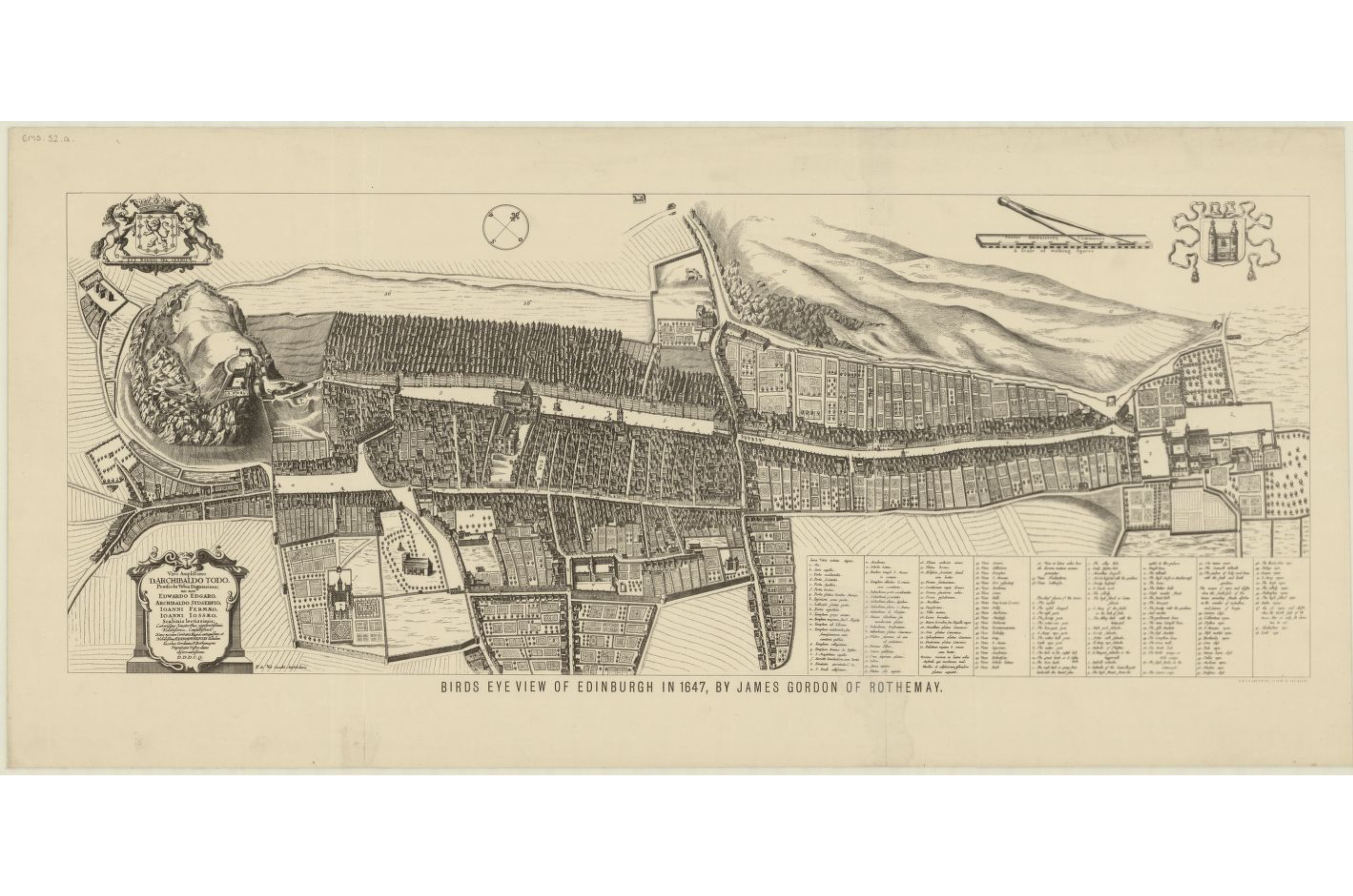
In the 17th Century, the top of the Royal Mile (nearest the castle) was crammed with multi-story tenements. The houses of the Canongate, farther down the hill, were somewhat grander, with narrow pockets of landscaped, symmetrical and peaceful gardens. However, these gardens disappeared as Edinburgh became ever more populated and overbuilt and after James VI relocated to England. You can see these gardens on the right-hand side of the 17th-century map below. This is the map that inspired the creation of Dunbar’s Close Garden in the mid-1970s.
There used to be an oyster cellar bar on the site of Dunbar’s Close. Local legend has it that Robert Burns visited in 1786 and very much admired the fashionable ladies of Edinburgh knocking back oysters with ale, followed by a wee sing-song and a dance.
Thy daughters bright thy walks adorn,
Gay as the gilded summer sky,
Sweet as the dewy, milk-white thorn,
Dear as the raptur’d thrill of joy!
— Address to Edinburgh, Robert Burns (1786)
Dunbar’s Close remained until the mid-19th century when it became dominated by tenements. Following the demolition of the nearby tenements as part of the slum clearances of the Royal Mile in the 1960s, the land was gifted to Edinburgh City Council in 1978. In 1983 it was then acquired by the Mushroom Trust, an Edinburgh-based greenspace charity. The trust hired landscape architect Seamus Filor to create a 17th Century-inspired Edinburgh garden.
The aim was to continue Patrick Geddes’ pioneering redevelopment of the Old Town through community garden spaces. Geddes created nine such spaces by 1911. The trust maintains the gardens so that workers, residents and visitors can take refuge from the hustle-bustle of the Royal Mile. Although Edinburgh’s secret garden is not so secret anymore, it still feels like it on most days.
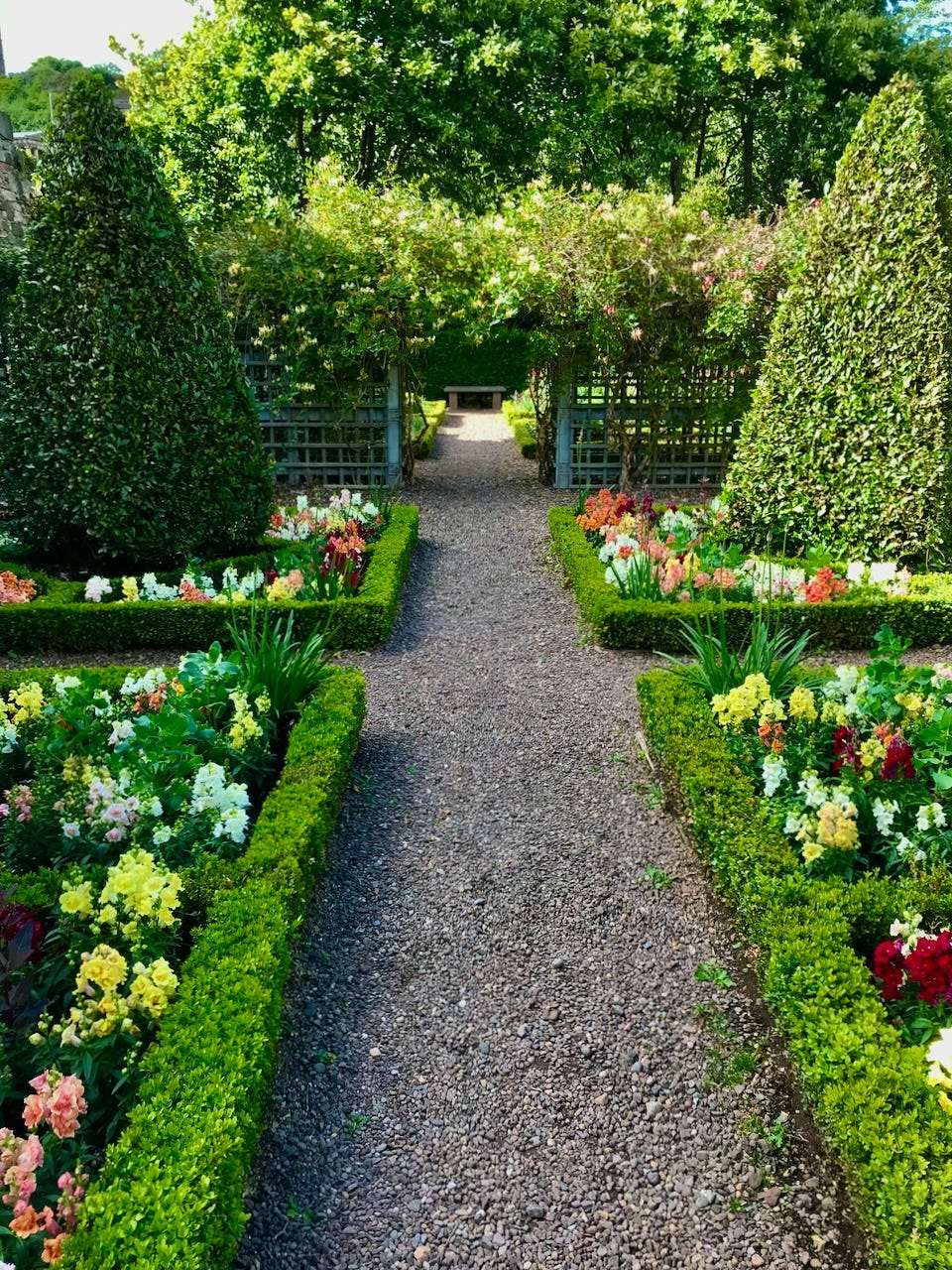
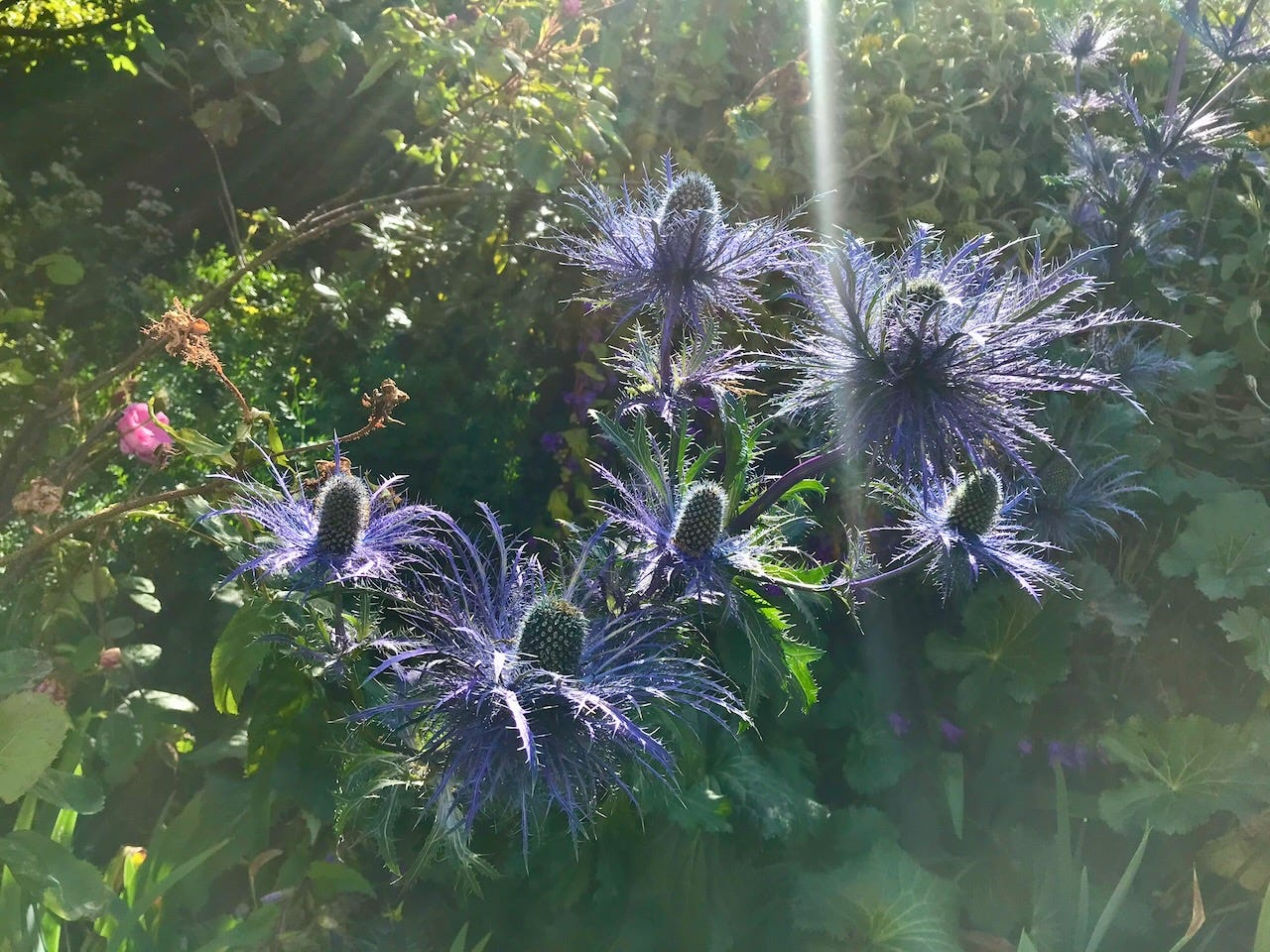
Both the design and the chosen plants were inspired by an authentic 17th-century knot garden, in consultation with garden historians at the Royal Botanic Garden Edinburgh. They have cultivated conical shrubs, yew hedges, heritage apple and pear cultivars, strawberry and cherry trees, foxglove and fig, artichokes, poet’s narcissus, rosemary, cotton lavender, wormwood, thyme, mint, butcher’s broom, honeysuckle, spurge laurel, Christmas rose, mezereon, snowdrops, peonies, Persian and African lilies, jasmine, iris violets and the magnificent queen-of-the-alps and of course the rowan tree. There are trellis and carved stone benches, gravel paths and high stone walls. You can also find Dunbar’s Close Tulip Tree (Liriodendron tulipifera) in the middle once you enter – an unusual species of tree rarely found in Scotland. Most of the plants are, where possible, authentic to the 17th-century version of their species. Each season brings out a different mood to the garden.
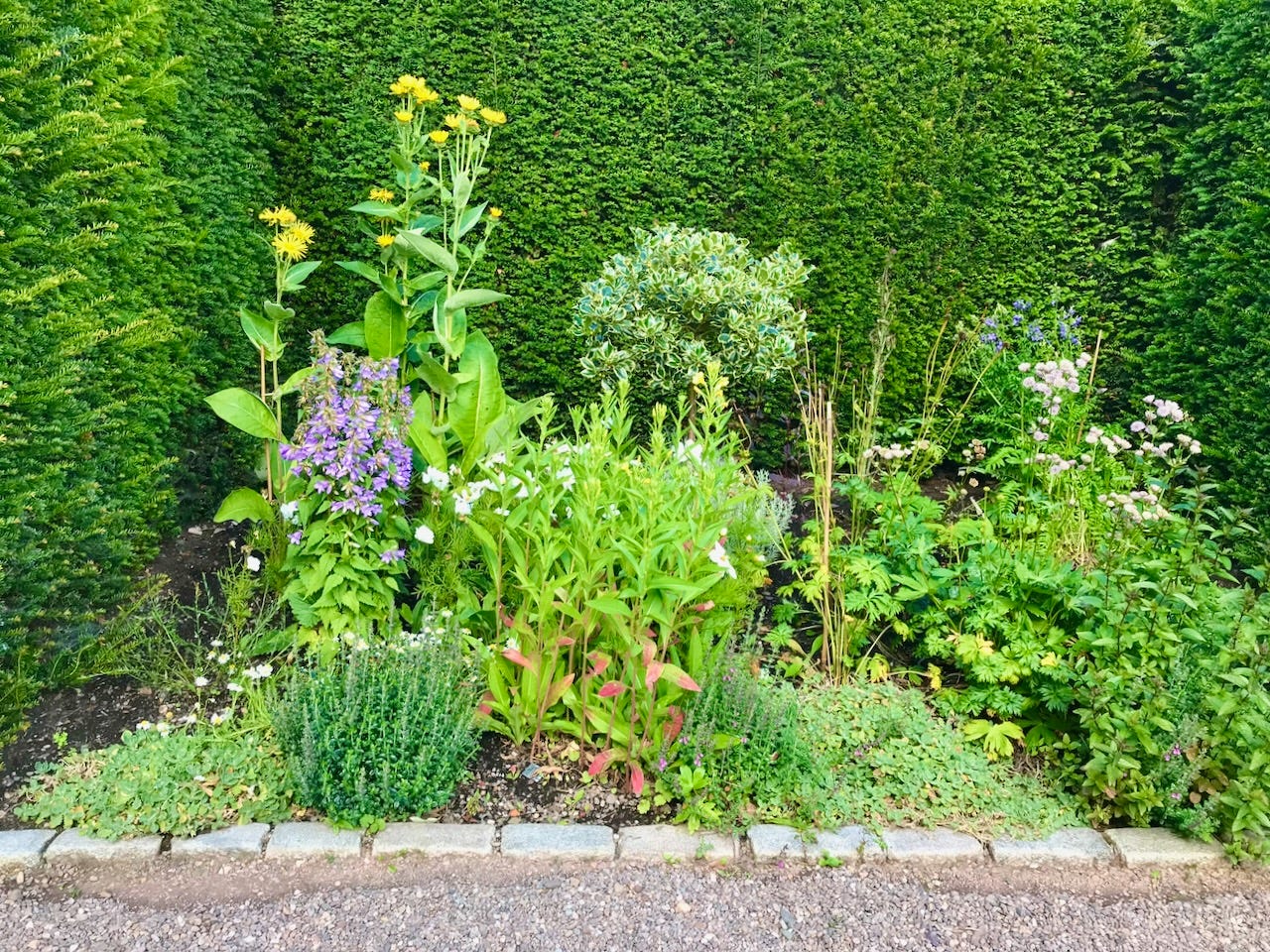
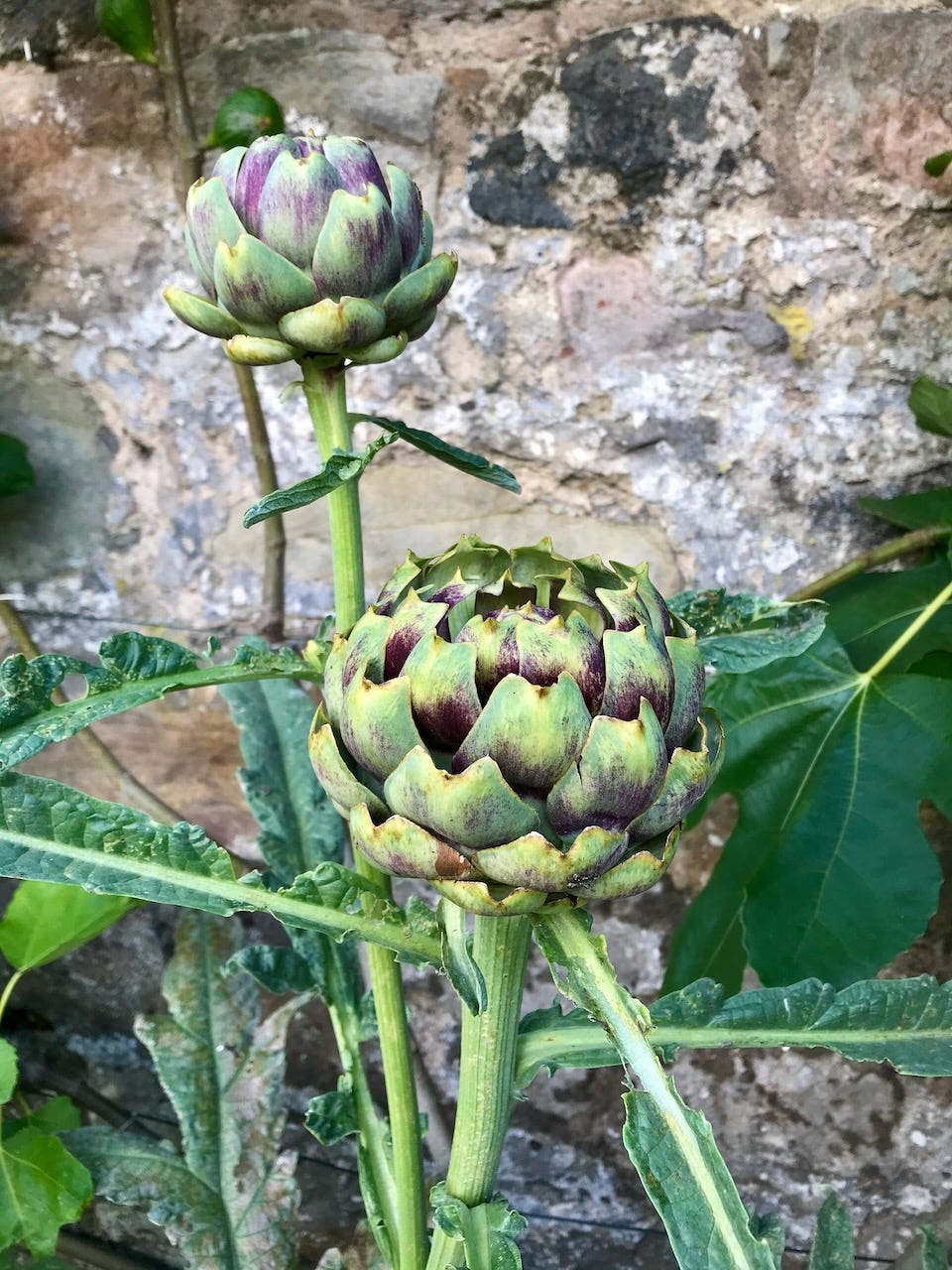
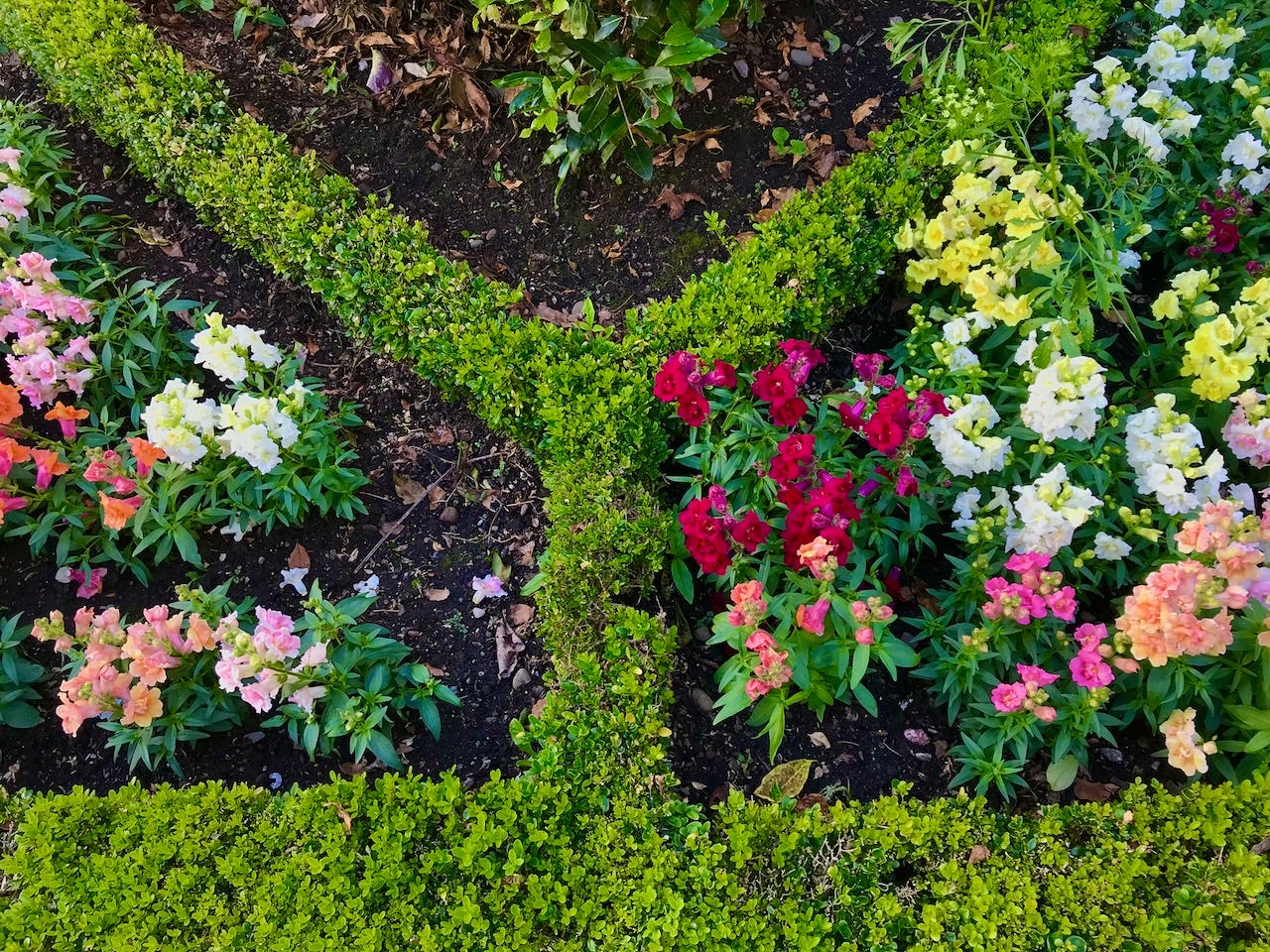
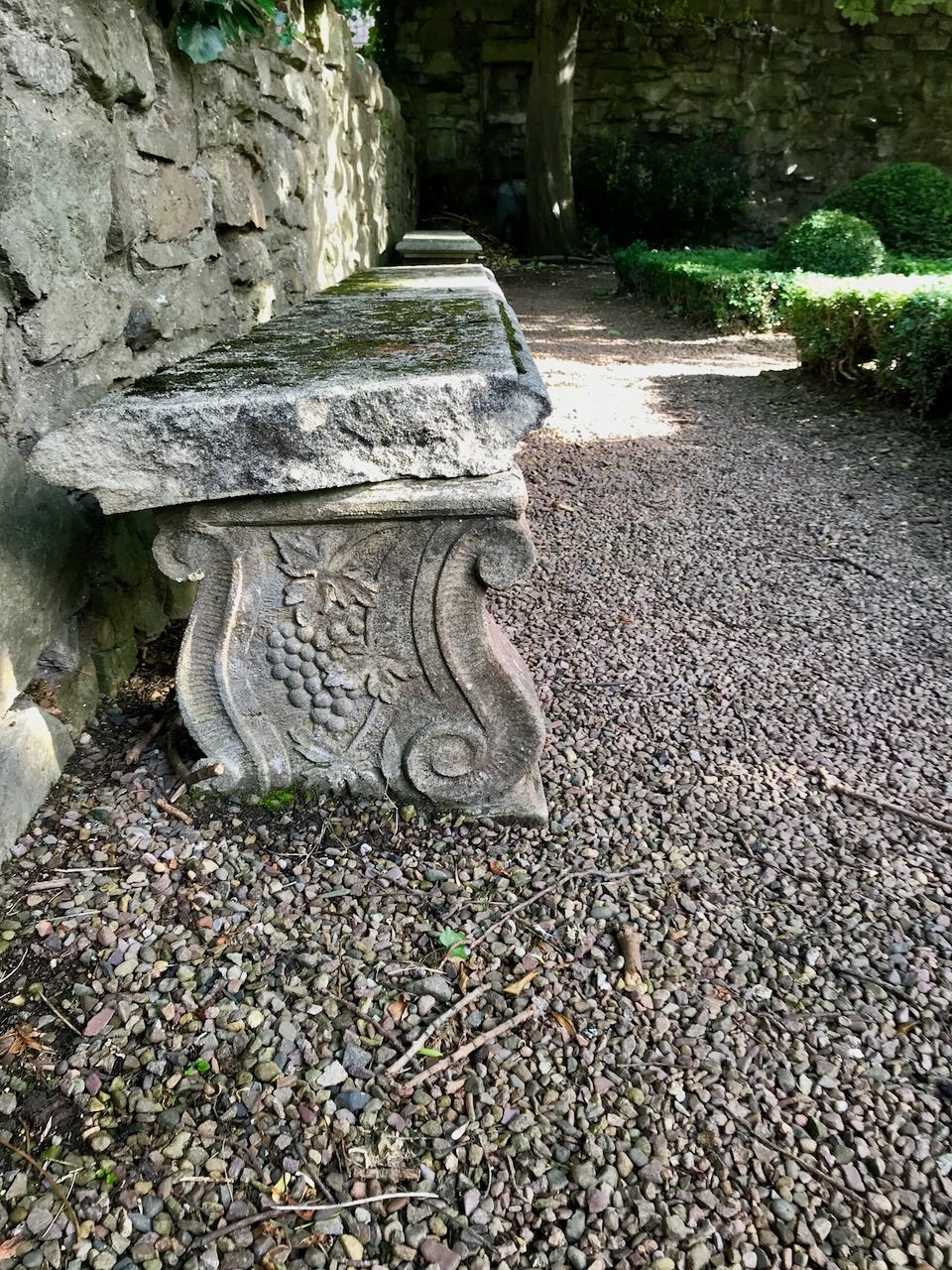
The garden welcomes you to come in and munch your takeaway lunch, or cradle a coffee. You can people-watch at a much slower pace, or flower-gaze, take photos, sketch. Come in to breathe slow, contemplate, relax, meditate, plan, dream, or even sing your big and beautiful heart out, as (dearly-missed) Scott Hutchison from Frightened Rabbit did here:
Although gated, the garden is free to enter and open to the public in daylight hours – check the sign on the way in for times. Much like White Horse Close, you can just duck in here for five minutes and time-travel.
Authentic? not completely. Genuine? I think so.
On the way out to the cobbled courtyard, take time to look up at the balconies in the tenement above the garden. You’ll have to peep through the trees. There are red-painted cast-iron brackets supporting the concrete balcony platforms.
Although the close was named after Edinburgh solicitor and writer David Dunbar, who owned the original tenements on either side of the close, I can find nothing about the man or his work. Could it be another of Edinburgh’s myth-making stories? Who knows? Really, I just come here for the time-travel, the flowers, the tranquillity, and the furtive opportunity to sniff the lavender and rub the scent into my hair. I may have once been a bee. Take a picnic and stop awhile in happy contemplation; you might just find me by the lavender.
137 Canongate, Edinburgh EH8 8BW